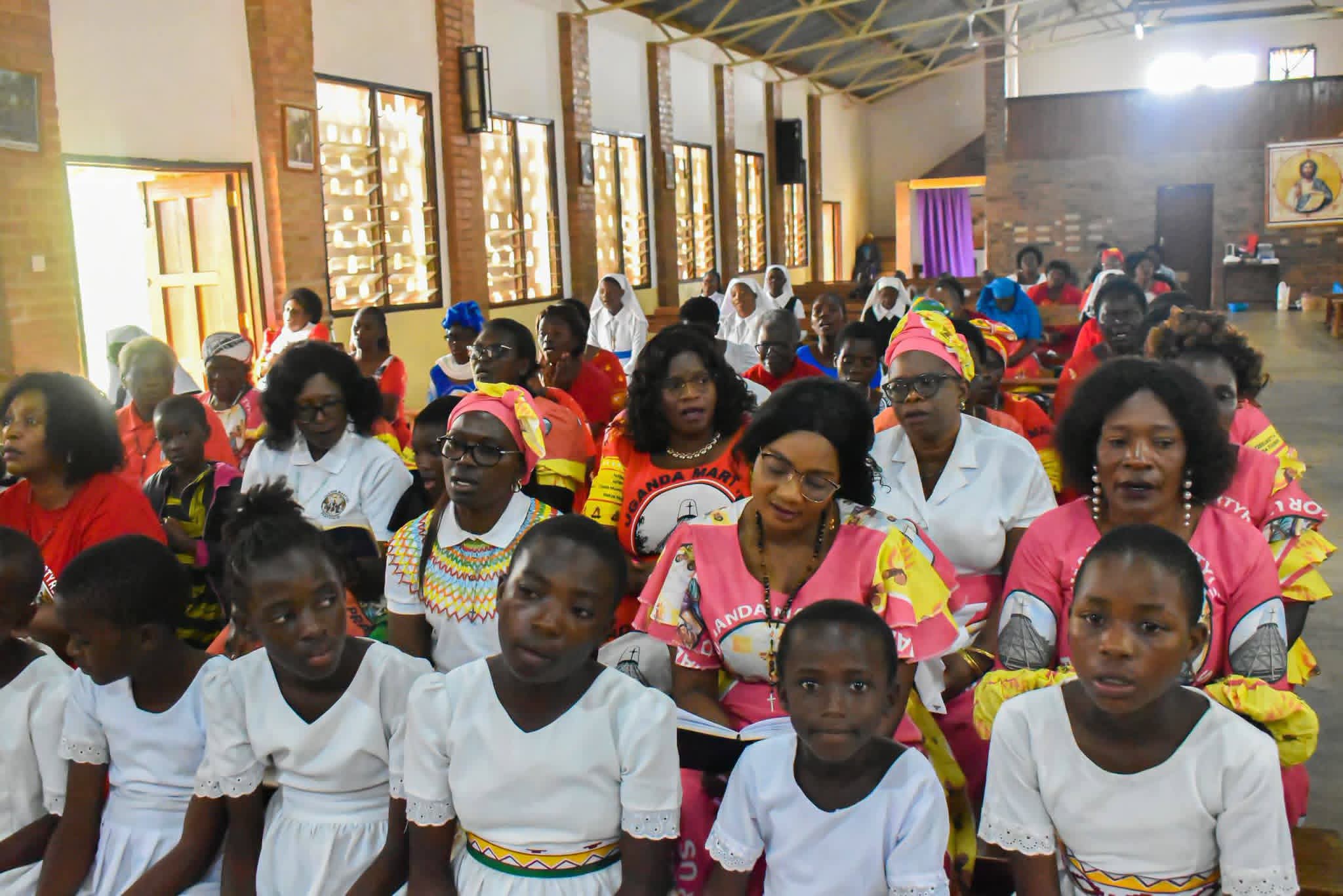
The recent sessions conducted within Chibavi Community have demonstrated a strong interest among young people in continued learning and open dialogue on issues that directly affect their lives. Building on this positive response, there is a clear indication that similar initiatives should be extended to other surrounding areas so that more youths can benefit from structured, value-based engagement.
In particular, future interventions are encouraged to place greater emphasis on Sexual and Reproductive Health, responding to the specific concerns and aspirations expressed by participants. Continued support and mentorship from SELL Programme volunteers will therefore be essential in sustaining this learning journey and ensuring that young people have access to accurate information and opportunities for personal growth and empowerment. To explore these findings and recommendations in more detail, please access the full session report in PDF format below.
According to Mr. Crief Daniel the Laudato Si coordinator he said that the global Church’s annual Laudato Si’ Week is a powerful moment for reflection and action. While its theme encourages a global move from hope to action, the Diocese of Mzuzu in Malawi has already fully embraced this mandate, providing a compelling example of how ecological conversion can transform a local community. This Laudato Si’ Week, the diocese’s long-standing commitment stands as an invitation for us all to celebrate not just a concept, but a living, breathing reality.
A living testament to ‘Laudato Si’
Since Pope Francis released his landmark encyclical in 2015, the Diocese of Mzuzu has worked to turn its principles into tangible action. Much of this work is centered around the Katoto Forest, a vital 192-acre green lung that was facing rapid deforestation. In response, the diocese established its Integrated Ecology Centre (IEC) right in the heart of Mzuzu city.
The IEC is the hub for the diocese’s environmental mission, which includes several major achievements:
Protecting the Forest: A key success was the completion of a 4.5-kilometer perimeter fence at Katoto Forest in 2025, a project lasting two years that halted illegal encroachment and allowed the ecosystem to recover.
Training Advocates: A core focus is education, with the Centre training youth from local townships and universities in organic farming, forest management, and ecology. New facilities, including a hostel and an ecology hall, are built to expand these programs as Training of Trainers (TOT) hubs.
Planting for the Future: The diocese holds an annual tree planting season. In 2025-2026 alone, more than 11,000 trees were planted across various parishes, part of a sustained effort to restore the land for future generations.
Gaining Recognition: This work has been internationally recognized. A lot of benefactors are international who believe in this dream and work.
Integrating Faith:
A deep spiritual connection underpins all the environmental work of Mzuzu Diocese. This foundation was laid by the Emeritus Bishop John Ryan, who chose his motto, “Everything except sin is sacred,” based directly on the teaching of Laudato Si’. This powerful theology reminds us that care for creation is not an add-on to faith, but is integral to it because every creature, every forest, every drop of water reflects the face of God.
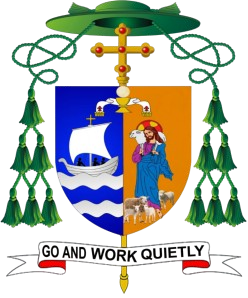
Today, Bishop Yohane Suzgo Nyirenda, the current shepherd of Mzuzu Diocese, has taken this spiritual foundation and given it a quiet, radical direction. He often urges his priests, religious, and lay faithful to “go and work in silence.” These words are not a call to inaction, but to a deeper kind of action-one done without seeking applause, without noise, without self-promotion. In a world that celebrates loud declarations, Bishop Yohane’s instruction echoes the hidden growth of a seed in the soil, or the quiet work of roots drawing water to sustain a forest.
This “silent work” is exactly what the Integrated Ecology Centre (IEC) at Katoto Forest has been doing: planting trees year after year, building fences without fanfare, training young people in organic farming far from the spotlight. It is the patient, humble labour of protecting our common home because it is sacred not because someone is watching. In this way, Bishop Yohane’s “go and work in silence” becomes the living translation of Bishop Ryan’s “everything except sin is sacred.” One gives the vision; the other gives the method.
Why we celebrate
This year, Laudato Si’ Week is celebrated from May 17 to 24. Its theme, “From Hope to Action”, invites us to understand that hope is not passive but is made real through daily choices, community life, and concrete acts of care. The Diocese of Mzuzu shows us the way.
Celebrating the diocese’s work is important for three key reasons:
It embodies the ‘Hope to Action’ call: The diocese has moved beyond discussion, showing that the Church can be a powerful agent of environmental change.
It demonstrates ‘Integral Ecology’: The diocese’s work tackles interconnected social, economic, and environmental issues, from poverty alleviation through beekeeping and savings groups to the moral imperative of stewardship.
It inspires a renewed mission: Their achievements serve as a blueprint for other faith communities, proving that local, faith-based action can make a tangible difference.
The call resonates worldwide
“From the heart of Malawi to the global community, the message is clear: caring for our common home is a sacred duty, and through concrete action, we can build a more just and sustainable future for all.” Mr. Daniel
This year’s global celebration is particularly significant. In his message launching Laudato Si’ Week, Pope Leo XIV emphasized the link between peace and ecology, noting that conflicts around the world have severely slowed environmental progress. He called on everyone to renew their commitment to “integral ecology,” an approach that connects care for the environment with respect for human dignity and the pursuit of peace. This resonates deeply with the work in Mzuzu Diocese, where caring for the forest is also about caring for the community’s future.
Conclusion: celebrating a living, breathing reality
This Laudato Si’ Week, as the global Church celebrates “From Hope to Action,” the Diocese of Mzuzu reminds us that this call is not a distant ideal. Through the Integrated Ecology Centre, their tree-planting campaigns, and educational programs, the diocese is creating a living, breathing reality of what ecological conversion looks like. Their work is a powerful testament to a faith that is alive and actively healing our world. It is a cause for celebration and a model for us all.
The Laudato Si’ Coordinator for Mzuzu Diocese, Mr. Crief Daniel, led an engaging input session for 14 catechists gathered at the Pastoral Centre. The training placed the care of the Earth at its heart, equipping the catechists to become frontline messengers of integral ecology in their communities.
The Diocese understands the urgent need to equip catechists with this knowledge. It is sobering that Pope Francis’ encyclical Laudato Si’, written in 2015, has still not reached many of our faithful. For this reason, Mzuzu Diocese continues to weave ecological consciousness into the life of the Church. The session was highly interactive, blending observation, “talk with nature” activities, and a deep unpacking of Laudato Si’.
Fourteen catechists drawn from among the 22 parishes of Mzuzu Diocese are in attendance
“The distinction is clear: not dominion, but stewardship—for the earth was given to us as a gift, not a possession.” Crief Daniel
At the centre of the discussion was the critical distinction between “dominion” and “stewardship”. As Pope Francis reminds us, “We are not God. The earth was here before us and it has been given to us” [LS 67]. The catechists debated this thin line and reflected on the call to be protectors, not exploiters, of God’s creation. All 14 catechists, drawn from the three levels (years) of their of training, were urged to live out and answer the call of the late Pope Francis. The group was challenged to preach and to convert hearts towards the core messages of Laudato Si’, including its practical call to a new lifestyle.
Catechists well equiped as stewards of creationCatechists listening attentitivelyReady for mission
“Many things have to change course, but it is we human beings above all who need to change” [LS 202].The catechists had opportunity to ask questions and receive direction on the Diocese’s concrete steps toward caring for the Earth. This message comes at a crucial time as Malawi and the globe face pressing climate change realities — from erratic rains to droughts and floods that hurt the poorest first.
The group was tasked to embrace a new lifestyle that respects traditional wisdom in caring for the planet, remembering that “we are not disconnected from the rest of creatures, but joined in a splendid universal communion” [LS 220]. Mzuzu Diocese is already moving forward with plans to create an Integrated Ecology Centre, with an Ecology Education Centre as its centerpiece. The Diocese knows the importance of raising a generation that is conscious of nature and ready to be its custodians. We are all interconnected: man is not above nature but a participant within it.
Mr. Daniel expressed his joy that the Church is taking this bolder path to train catechists who will reach thousands. These trained catechists will be assigned to different parishes where they will play a bigger role in guiding communities on ecological conversion.
“The SELL Programme stands as a beacon of hope in the Diocese of Mzuzu, bearing lasting fruit by shaping leaders who courageously live out faith, champion justice, and care for our common home.” — Mr. Isaac Thindwa
Also present was Ugweru Organisation, through Mr. Isaac Thindwa, who gave an input on the SELL Programme — Sharing and Experiencing Life Lessons. The SELL Programme remains one of the most important components in the Diocese of Mzuzu, and it continues to bear much fruit by forming leaders who integrate faith, justice, and care for creation.
Mr. Daniel extended heartfelt thanks to the Diocesan Environmental Committee for the commendable work they are doing in answering Pope Francis’ call. He also alerted the public that groups will soon start coming to the new centre to learn about Mother Earth. As Pope Francis wrote, “The ecological crisis is also a summons to profound interior conversion” [LS 217]. Mzuzu Diocese is answering that summons – one catechist, one community at a time.
“I urge every representative here today to ignite a fire of knowledge as multipliers—go forth and train your fellow members in youth clubs and organizations across our diocese!” — Mr. Crief Daniel, Laudato Si’ Coordinator
In a major step towards environmental conservation and sustainable agriculture, the Mzuzu Diocese, through the Integrated Ecology Centre at Bishop’s Residence, has successfully trained 38 young people in the production of briquettes and organic manure.
The training, which took place over two separate intensive sessions held at two-day intervals, brought together youth representatives from various clubs and organisations across the region. The initiative underscores the Diocese’s ongoing commitment to fighting climate change and restoring degraded land.
The training was organized by Malumbo Mkinga of the Green Girls Platform and the Model Farming Centre under the Laudato Si’ Project. The session focused on soil degradation as a major environmental challenge threatening agricultural productivity. Participants explored the causes and effects of soil degradation, alongside practical conservation methods.
The highlight of the day was a hands-on session where the youth learned permaculture manure production and the art of briquette making. The briquettes were presented as a viable alternative energy source designed to reduce household reliance on firewood and charcoal.
Mr. Crief Daniel, the Laudato Si’ Coordinator, encouraged all participating representatives to become multipliers of knowledge, tasking them to train fellow members in their respective youth clubs and organisations.
During this session, the youth learned to make three types of briquettes:
Un-carbonised briquettes
Carbonised briquettes
Semi-carbonised briquettes
These briquettes serve as a direct replacement for charcoal, and using them significantly minimises deforestation caused by charcoal burning.
On soil degradation management, the training focused on creating composite manure using locally available resources. The youth were shown how this manure improves soil health, leading to better plant growth and higher crop yields.
A Timely Response to Malawi’s Climate Crisis
These trainings come at a time when Malawi is facing severe impacts of climate change: prolonged dry spells, cyclones, flash floods, and rising temperatures that continue to disrupt food systems and livelihoods. From Cyclone Freddy’s devastation to recurrent droughts in the Southern Region, the evidence of a changing climate is undeniable.
It is in this context that the Mzuzu Diocese is not merely teaching practical skills but is actively working to create a new consciousness towards nature and a new way of being one rooted in respect for creation and a sense of ecological responsibility.
The Spirit of Laudato Si’: An Integral Ecology in Action
The work being done at the Integrated Ecology Centre is a direct implementation of Pope Francis’ encyclical letter Laudato Si’: On Care for Our Common Home. In that landmark document, the Holy Father writes:
“What kind of world do we want to leave to those who come after us, to children who are now growing up?” (LS 160)
The Mzuzu Diocese has taken this question to heart. By training young people in briquette making and organic manure production, the Diocese is promoting an integral ecology where environmental, economic, and social issues are addressed together. As Laudato Si’ reminds us, “We are faced not with two separate crises, one environmental and the other social, but rather with one complex crisis which is both social and environmental” (LS 139).
These trainings respond directly to the encyclical’s call to replace fossil fuels with renewable energy sources and to adopt sustainable agricultural practices that heal the land rather than exploit it.
Fire: one of the ‘first elements’Participants listening carefullyBriquettes making in the process
Importance of the Integrated Ecology Centre
The Integrated Ecology Centre at Bishop’s Residence continues to prove itself as a vital hub for environmental education in the region. These trainings are crucial because they move beyond theory, offering tangible solutions that youth can immediately implement at home and in their communities.
By hosting such sessions, the Centre is creating a ripple effect. The 38 trained youth have committed to sharing their new skills with their peers and stakeholders in the fight against climate change.
A Milestone for Environmental Learning
This event marks a significant milestone for the Mzuzu Diocese, demonstrating a growing appetite among young people for environmental stewardship. The fact that diverse groups are coming to the Centre specifically to learn about ecology shows a shifting mindset from seeing environmental degradation as a hopeless problem to tackling it with practical, local solutions.
As these 38 young leaders return to their communities to train others, the Diocese is proud to be planting seeds of knowledge that will grow into a greener, more sustainable future for all.
“The knowledge gained will not only remain among us, but it will be shared with the communities and stakeholders we work with,” read a joint statement from the participants at the end of the training. The Mzuzu Diocese extends its gratitude to integrated ecology centre, Green girls and all the facilitators for their dedication to empowering the next generation of environmental protectors and for walking the path of Laudato Si’ with courage and faith.
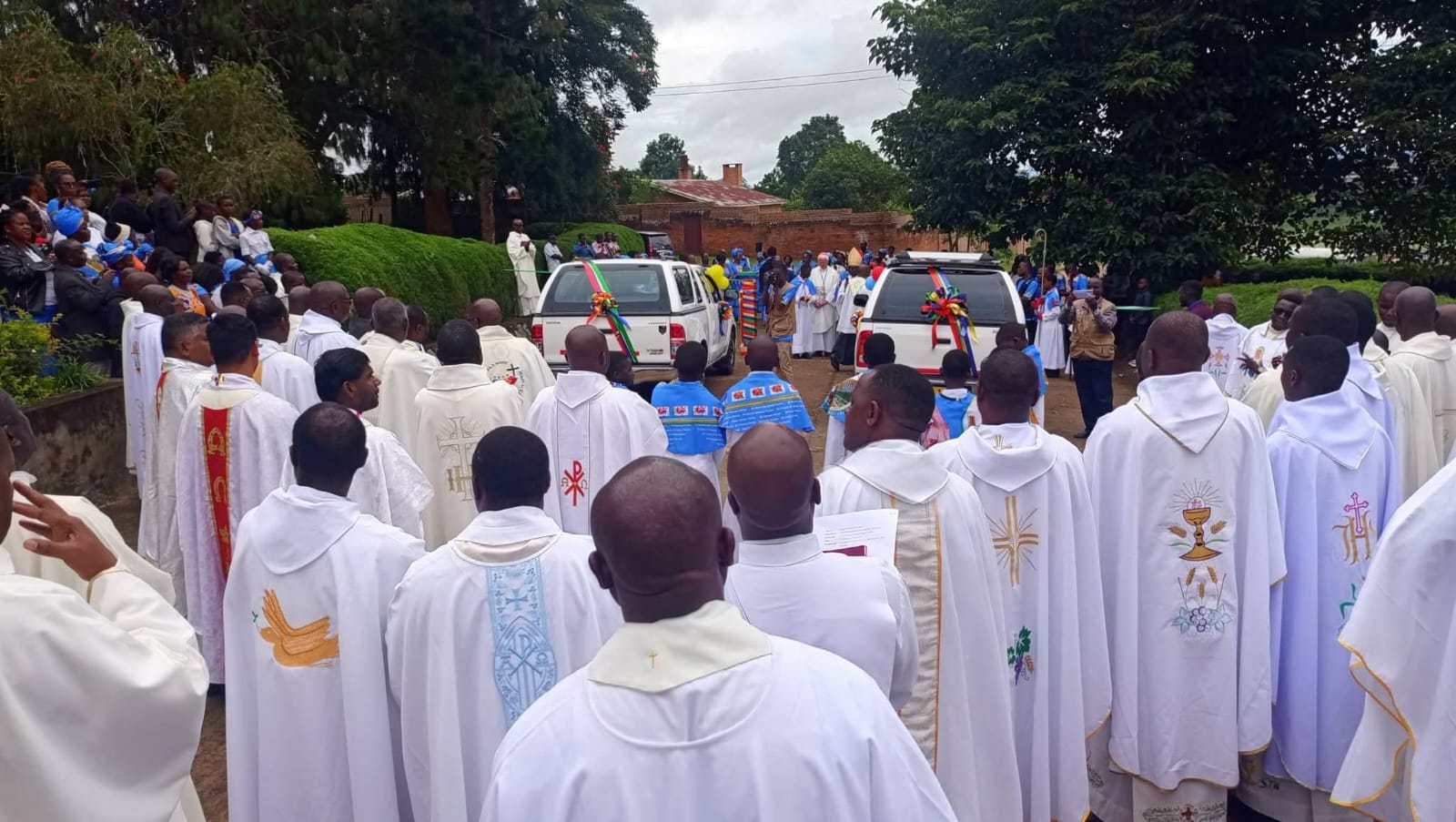
Mzuzu Malawi- Mzuzu Diocese Events Committee has handed over two vehicles to the Diocese, following a successful fundraising event the committee had last year.
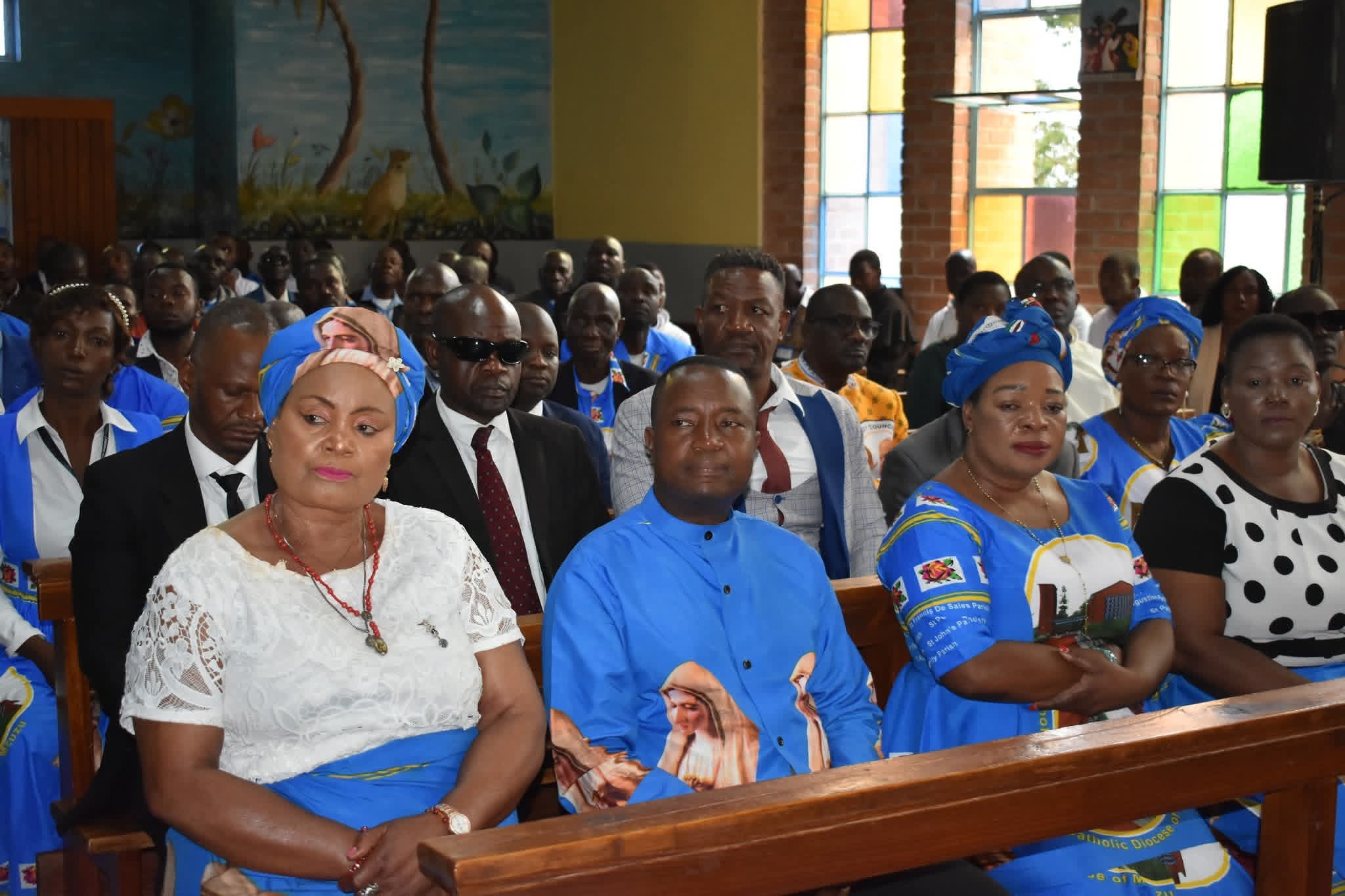
The ceremony took place on 31st April 2026 at St Peters Cathedral, where the committee handed over two vehicles to the bishop of the Catholic Diocese of Mzuzu Rt Rev Yohane Suzgo Nyirenda.
New vehicles for Mzuzu Diocese Priests
Speaking after receiving the vehicles, Bishop Nyirenda appreciated the development by the events committee, saying the vehicles will greatly help priests with transportation, enhancing their pastoral ministry across the diocese.
Bishop Nyirenda receiving the new vehicles Keys from the Events Chairperson Dr Elija Wanda
Bishop Nyirenda also appreciated the dedication of the Christians in the diocese, who contributed generously towards the fundraising.
Mzuzu diocese events committee chairperson Elija Wanda said it is tough these days for the diocese to find donors to support transportation means for the diocese, that is why they decided to help out with the vehicles.
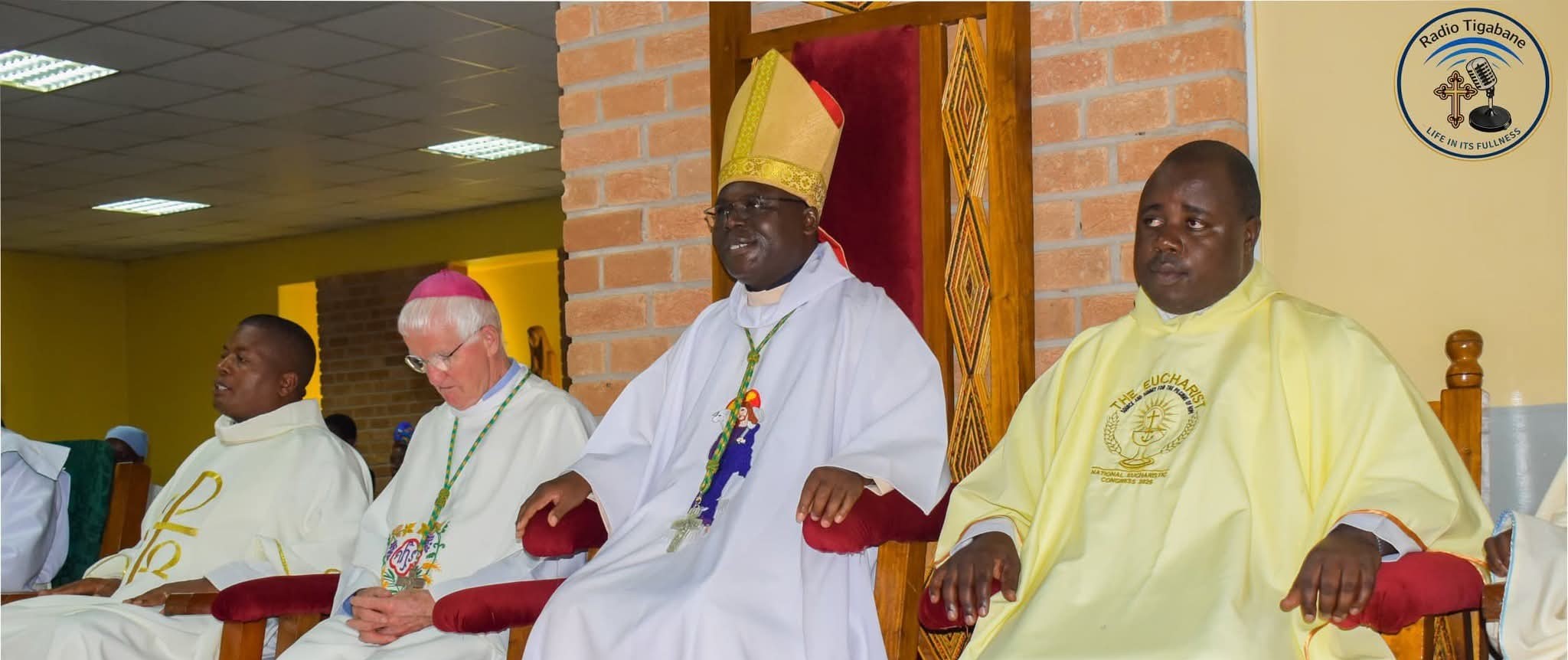
Mr. Chita Msowoya (Mzuzu Diocese Laity Chair), Fr. Raymond Mwale (Mzuzu Diocese Pastoral Director) Bishop Nyirenda of Mzuzu Diocese, Bishop Ryan Bishop Emeritus of Mzuzu Diocese & Fr Cyprian Ngoma (Liturgy Chair)
The committee raised 60 million kwacha through a dinner and dance fundraising and contributions from the parishes
The newly elected Association of Diocesan Catholic Clergy of Malawi ( ADCCOM) National Executive Committee ( NEC) has lined up the first areas of priorities for the Diocesan priests in Malawi.
Speaking to the new Chairperson Fr Yotam Msumba he optimistically said the new committee sincerely appreciate the good work of their predecessors as this new responsibility looks possible because of the strong foundation of ADCCOM laid by the previous leaderships especially by implementing the ADCCOM strategic plan snd advancing the mind of ADCCOM investments.
Fr Yotum Msumba
Their first priority as a new committee will be to introduce ways of improving the welfare of priests especially those in difficult situations.
“We are committed to support the well-being of priests, especially those who are sick, elderly, or facing social difficulties” said Fr Msumba.
The committee is also geared to strengthen unity and fraternity among priests, promoting support, understanding, and reconciliation because united they will stand , divided they will fall.
The new NEC will also focus on promoting priest formation and spiritual growth by encourage ongoing formation, retreats, and spiritual renewal to strengthen their brother priests in their vocation and ministry.
Collaboration with Bishops is unexceptional for wisdom and blessings for the new committee. The new committee will be working closely with the bishops of all the dioceses in a spirit of respect, dialogue, and shared mission.
The new committee will also encourage the use of modern communication technologies with positive purpose and in an integrity manner and promoting transparency within the association.
Finally Fr Msumba said the new committee will aim to support their brother priests in their pastoral work while ensuring accountability and continuity of good initiatives.
In all these areas of focus as a new ADCCOM executive Fr Msumba kindly asks the fellow priests and the faithful to accompany them and pray for them.
New Office bearers of ADCCOM-NEC are as follows Chairperson:
Fr. Yotam Msumba of Mzuzu diocese has been elected as the new Chairperson of the Association of Diocesan Catholic Clergy of Malawi (ADCCOM) National Executive Committee (NEC).
Fr Yotum Msumba
The elections were done this afternoon the 16th April, 2026 at St Anthony ( Kachebere) where the ADCCOM members are meeting for their 27th Plenary.
Fr Msumba takes over the Chairperson responsibility from Fr Steve Kamanga of Mangochi Diocese who has completed his two years tenure.
The other priests elected in the new National Executive Committee are Vice Chairperson: Fr. Joseph Kapalasa (Dedza Diocese), Secretary: Gerald Malota (Dedza Diocese), Vice Secretary: Innocent Nkhambule (Mzuzu Diocese), Treasurer: Francis Bisai (Archdiocese of Lilongwe), Vice Treasurer: Lawrent Simwera (Karonga Diocese) and Committee Members: Robert Songa (Karonga Diocese), Peter Makina (Archdiocese of Lilongwe), Tobias Mkweu (Mzuzu Diocese), Ashley Ngwira (Karonga Diocese)
In the acceptance remarks, the incoming new ADCCOM – NEC chairperson Fr Yotum Msumba said they have welcomed the new responsibilities despite the many responsibilities they already have in their various parishes. Fr Msumba further said that with God guidance and the support of the entire National ADCCOM family, the new committee hopes to accomplish the huge assignment entrusted unto them successfully.
Malawi ADCOM Members
The new committee is expected to serve for two years.
Congratulations to All!
Congratulations to Mzuzu Diocese Priests in the new ADCCOM NEC!
21 March, 2026 was a colorful day at St Patrick , Kaviwale Outstation of St Albert the Great parish as they remembered and celebrated the life of their church patron Saint Patrick.
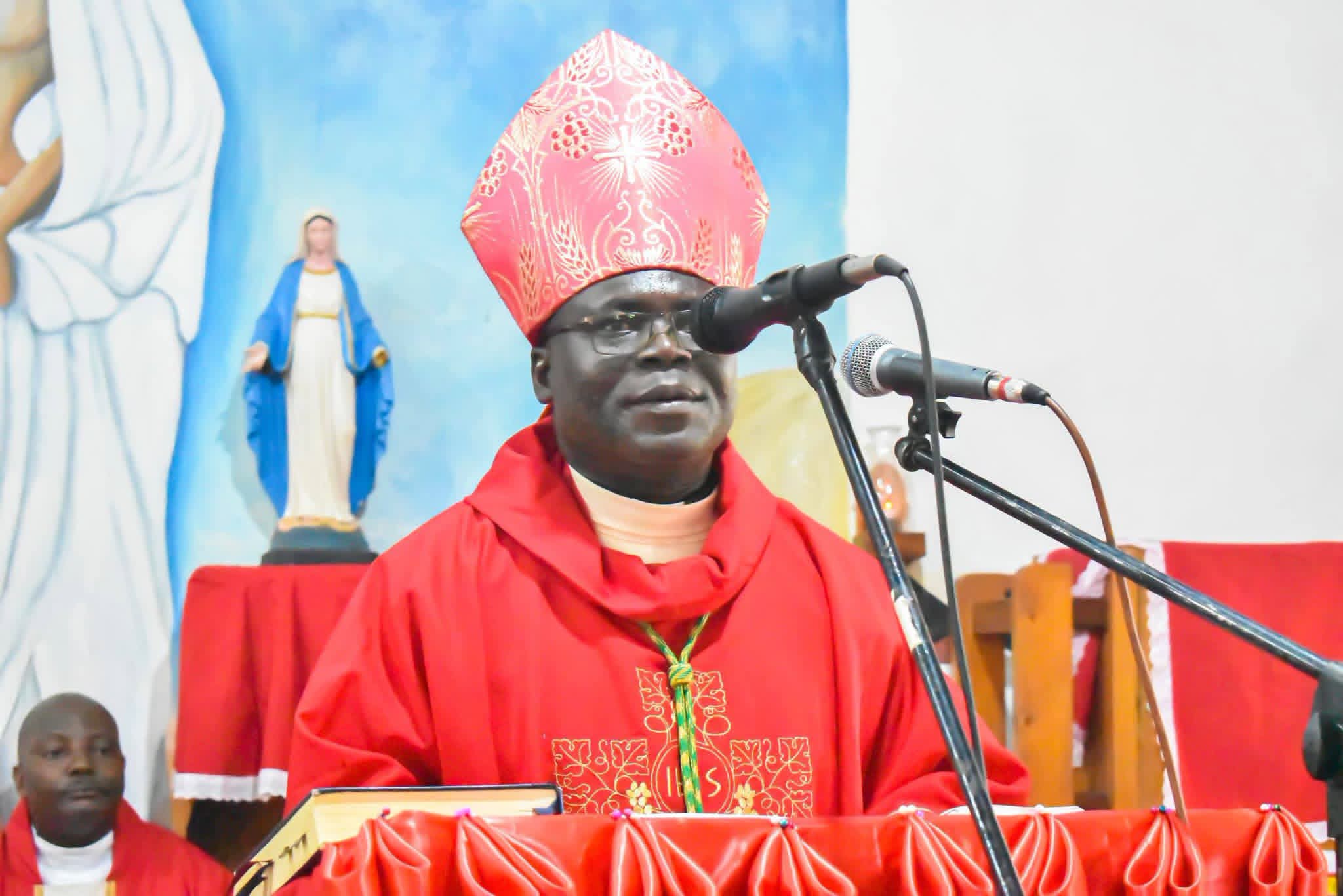
The day started with the holy mass which was led by the bishop of Mzuzu Diocese Rt. Rev. Yohane Suzgo Nyirenda.
The bishop encouraged the act of remembering and celebrating the lives of patron saints who are offering guidance and inspiration to Catholic churches and individuals.
Bishop Nyirenda
The bishop also advised the faithful of St Patrick’s Outstation to learn and follow the footsteps of their patron who until his life of faith, dedication in prayers even when he was a slave before becoming a priest, zeal for team work in achieving pastoral work and love for the people are a reminder of the virtues to strive for and the power of devotion in overcoming life’s challenges.
The parish priest of St Albert the Great parish Father Yotam Msumba explained that St Patrick’s Outstation was established in 2015 and it accommodates Catholics of Kaviwale, area 4 and part of the Sonda area.
Father Msumba also described the faithful of Kaviwale Outstation as hardworking and dedicated to their faith and church developments as on their own they are able to contribute generously to the construction of their church.
The patron saint day organizing chairperson, Steven Msukwa expressed gratitude for the bishop’s words of encouragement and blessings, stating that they have been empowered to stand still and endure the life challenges as St Patrick did.
St Patrick’s Outstation Faithful
Saint Patrick is originally the patron saint of Ireland and all who are called by this name, he is best known for introducing Christianity to the Irish people. Legend has it that he used the shamrock to explain the concept of the Holy Trinity. His feast day, March 17th, has become a global celebration of Irish culture and Christian faith.
Rumphi, Malawi – March 12, 2026 – In a solemn ceremony held at St. Patrick’s Health Centre, the facility proudly inaugurated a state-of-the-art ultrasound machine (USG) and advanced laboratory equipment. This significant event, attended by distinguished ecclesiastical and medical dignitaries, represents a pivotal advancement in healthcare delivery for the Rumphi district and its environs.
A cross section of invited guests to the function (government, private and ecclesial)
The inauguration was graciously performed by Rt. Rev. Bishop Yohane Nyirenda, Bishop of the Mzuzu Diocese, who also presided over the blessing rites under auspices of Dr. Arnold Jumbe, Director of Rumphi District Hospital. Also in attendance was Rt. Rev. Bishop John A. Ryan, Bishop Emeritus of the Mzuzu Diocese, whose presence lent spiritual gravitas to the proceedings.
Bishop Nyirenda offered heartfelt blessings, stating: “These machines are more than medical tools; they are instruments of God’s mercy, extending healing hands to the vulnerable in our community. May they serve with precision and compassion for years to come.”
Bishop Yohane S. Nyirenda leading the blessing service at the centre
Significance of the new equipment
Dr. Jumbe echoed this sentiment during the commissioning: “This ultrasound and lab equipment will transform diagnostics at St. Patrick’s, reducing referrals and enabling timely interventions. We commend the donors for their visionary support in strengthening our district’s health infrastructure.”
The newly installed USG machine and laboratory apparatus will markedly enhance the centre’s capacity to provide comprehensive outpatient services. Equipped for high-resolution imaging and precise testing, these tools address critical needs in maternal health, infectious disease management, and routine diagnostics—areas of pressing demand in rural Malawi. This upgrade aligns with broader diocesan efforts to uphold the Catholic Church’s mission of integral human development, ensuring accessible, quality care for all, regardless of ability to pay.
Pictorial focus
Bishop John Ryan (emeritus) and DHO appreciating the USG
Bishop Yohane S. Nyirenda blessing the lab equipment
Newly acquired laborator equipment
A medic explaining some of the modern equipment
Group photo
Official opening of the lab
Post-ceremony Fellowship
The formalities concluded with a luncheon hosted in the convent, where guests partook in a meal symbolizing communal unity and thanksgiving. This gathering provided an opportunity for reflection and dialogue on sustaining healthcare advancements.
Gracious acknowledgments
The acquisition of this equipment was made possible through the benevolence of the Provincial Superior and the 1974 MBBS batch mates of Sr. Dr. Lissy Jose, whose collective generosity exemplifies selfless stewardship. St. Patrick’s Health Centre extends profound gratitude to these benefactors, whose contributions will undoubtedly save and improve countless lives.
For further information or to support ongoing initiatives, please contact the Bishop of Mzuzu Diocese and the Sisters at St. Patrick’s Health Centre, Rumphi.
On 13 March 2026, St John of God Hospitaller Services celebrated their Patron Saint, a ceremony which took place in Mzuzu
The ceremony was graced by Mzuzu Diocese Vicar General Very Reverend Fr Isaac John Katumbi who before leading the Mass, he started with touring the facility departments and service offer at St John of God in Mzuzu.
During the tour, Father Katumbi said the brothers and the co-workers are doing a great job and he encouraged them to expand their services and reach out to many people in the country.
Father Katumbi also urged the brothers and workers to take from the life of St John of God who dedicated his life to serving the poor, the sick and marginalized with compassion.
The vicar general Fr. Isaac John Katumbi
Brother Mitterrand Ndambun on behalf of the brothers of St John of God, said it was a wonderful celebration and they will continue working hard offering different services the institution offers.
St John of God Chief Executive officer Dr. Charles Masulani appreciated the mutual partnership with Mzuzu Diocese and all the support the institution is receiving from the diocese.
On expansion, Dr Masulani further said, they have plans to expand the services the facility offers to reach the whole diocese of Mzuzu and expand to Karonga Diocese.
One of the areas the Vicar General visited is the Child Development Centre (CDC), where the coordinator Moster Chirambo said the center focuses on supporting children’s development especially those with special needs, aiming to make a positive impact on young lives.
Saint John of God provides community-based mental health services, and services for children with a disability and special needs, it also runs St John of God University of Health Sciences.